Digital Layout Influences on Rapid Decisions Across Live Event Wagers and Poker Variants
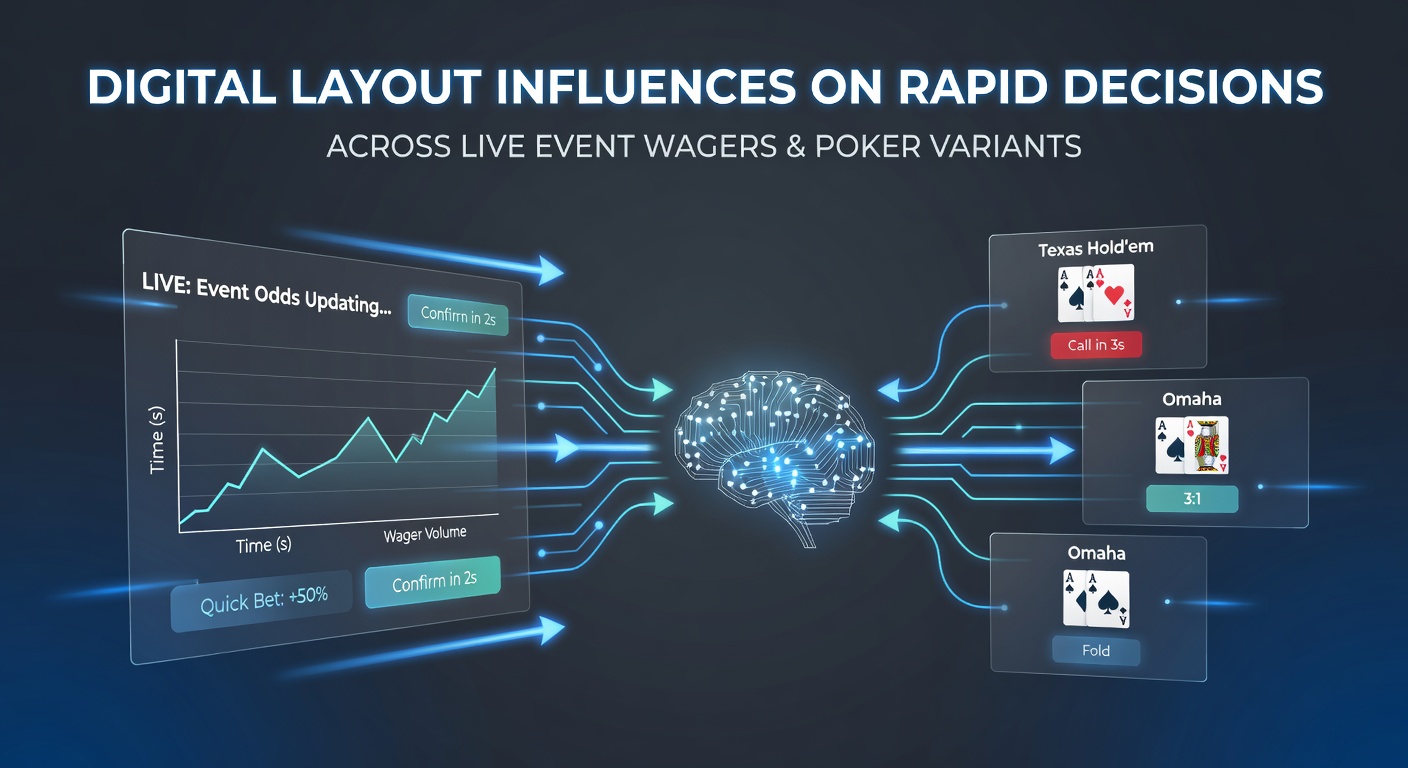
Digital platforms arrange visual elements in ways that directly shape how quickly users process options during live event wagers and poker variants, since button placement, color contrast, and information hierarchy guide eye movement and reduce hesitation when time-sensitive choices arise. Researchers who track user behavior note that compact grids for odds display allow bettors to scan multiple markets in under two seconds, whereas scattered layouts extend that interval and increase missed opportunities in fast-moving contests.
Core Elements of Interface Design for Live Wagers
Live event wagering relies on dynamic panels that update scores, player stats, and shifting odds in real time, and designers cluster these updates near prominent call-to-action buttons so participants can confirm or adjust stakes without scrolling through multiple screens. Data from platform analytics shows that when bet slip previews appear directly below the main odds feed, average decision latency drops by measurable margins across mobile sessions. Those who study cognitive load point out that limiting text density to essential figures keeps attention focused on the current play rather than forcing users to filter extraneous details.
Color coding plays another documented role, as green accents on active markets and red highlights on declining odds help users differentiate rapidly between favorable and unfavorable lines during the final minutes of a contest. Observers at industry conferences have recorded how consistent iconography for bet types speeds recognition even when users switch between sports and poker tables within the same application.
Poker Variant Layouts and Decision Speed
Poker interfaces present community cards, hole cards, and betting controls in fixed zones that remain stable across variants such as Texas Hold’em, Omaha, and short-deck formats, allowing experienced players to develop muscle memory for common actions like check, raise, or fold. Studies of eye-tracking patterns reveal that central placement of the timer and pot size reduces the glances needed before a decision, while peripheral chip stacks and player avatars supply context without competing for primary focus.
Variant-specific adjustments appear in fold and call button sizing, since larger touch targets accommodate quicker taps during heads-up situations where reaction windows shrink to a few seconds. Platform logs indicate that users complete more hands per hour when action buttons maintain uniform spacing regardless of whether the game runs in standard or turbo mode.
Cross-Format Interactions in Unified Applications
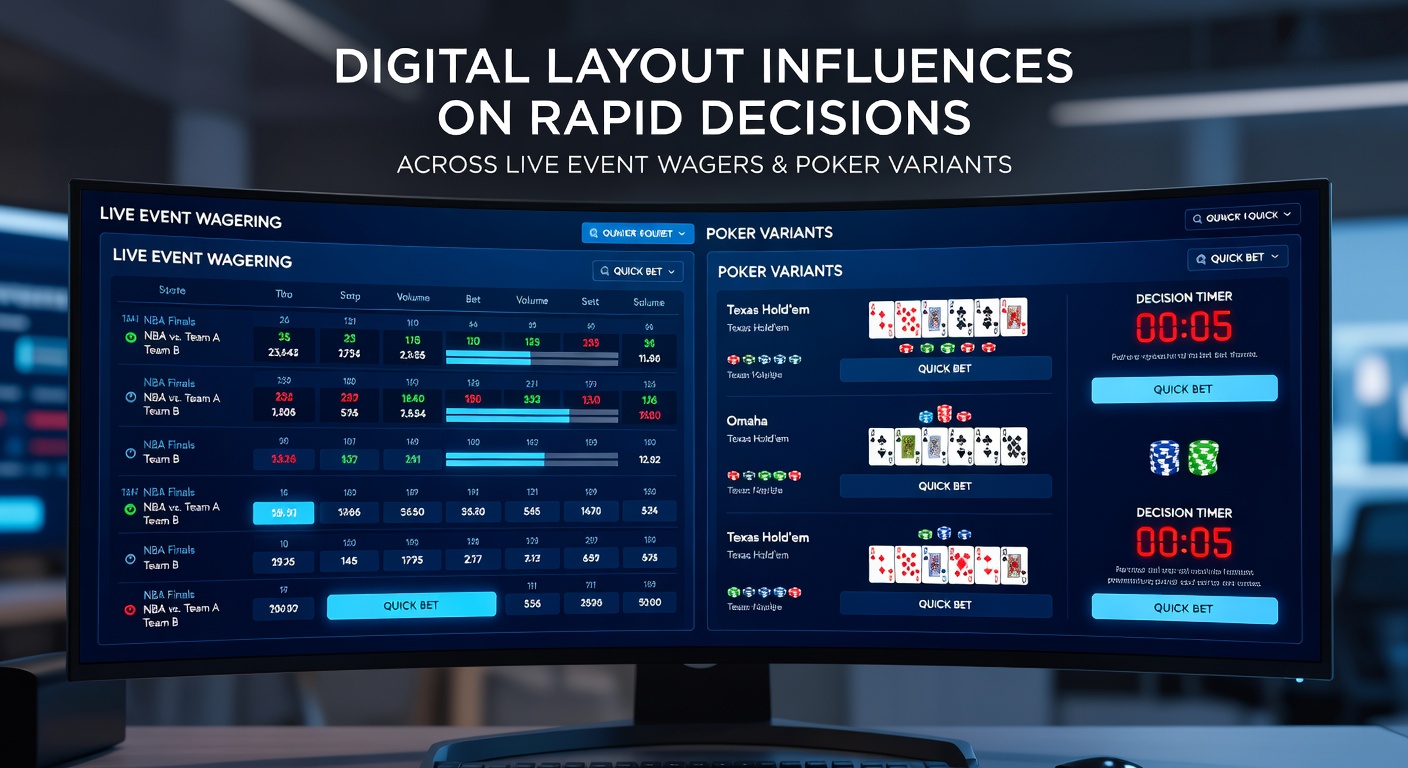
Many applications now embed live wagering panels alongside poker tables so that participants can monitor sports markets while waiting for their next hand, and seamless layout transitions between these modes prevent loss of context that would otherwise slow subsequent choices. Research conducted by university teams in North America demonstrates that predictive highlighting of likely bet ranges based on prior poker behavior can shorten the interval between card reveal and wager confirmation.
Regulatory bodies such as the Nevada Gaming Control Board require clear separation of active game elements from promotional banners, which in turn keeps decision pathways uncluttered and supports faster execution of both wager types. Similar guidelines from iGaming Ontario emphasize responsive scaling that preserves button accessibility across device orientations without forcing users to relearn control positions.
Trends Emerging in May 2026
By May 2026 developers have introduced adaptive layouts that rearrange elements according to detected connection speeds and device capabilities, ensuring that live odds streams and poker timers remain equally prominent even on variable networks. Early adoption metrics released by platform operators show continued reductions in average decision time when these responsive features activate automatically at the start of each session.
Integration of gesture-based shortcuts further compresses the sequence from observation to commitment, particularly in poker variants where swipe actions replace traditional taps for common folds or calls. Industry reports compiled across multiple jurisdictions confirm that such refinements maintain compliance while aligning visual flow with the pace of live events.
Conclusion
Layout decisions in digital environments continue to determine how efficiently users navigate rapid choices between live event wagers and poker variants, since every adjustment to spacing, color, and information order produces measurable shifts in reaction patterns. Ongoing refinements scheduled for release cycles after May 2026 aim to preserve these efficiencies while expanding accessibility across emerging device formats.